Whale Worksheets for Elementary

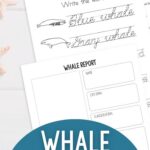
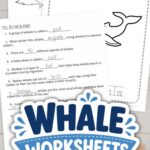
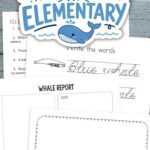
Whales give children plenty to wonder about, from where they live to how they stay warm. These Whale Worksheets for Elementary combine animal vocabulary, handwriting practice, and simple research for students in grades 1-3.
Find more ideas for your ocean study in this collection of Whale Activities for Kids.
Keep reading to see what’s included and how to use these activities with your young learners.
Printable Overview
|
Resource Detail |
Information |
|
Recommended age |
6-9 years old, grades 1-3 |
|
Subject |
Science and handwriting |
|
Number of pages |
5 pages, including an answer key |
|
Skills practiced |
Handwriting, vocabulary, research, organizing information, reading, and coloring |
|
Topics covered |
Whale names, classification, appearance, habitats, and facts |
|
Supplies |
Printer, paper, pencil, crayons or colored pencils, and a whale reference book or other reliable research source |
|
File type |
|
This post may contain affiliate links meaning I get commissions for purchases made through links in this post. Read my disclosure policy here.
Who Is This Printable For?
These pages are for students in grades 1-3 who are learning about whales.
Use them alongside an ocean unit or a short animal study. Younger students may need help reading the questions and finding information for their reports.
Why Use Whale Worksheets for Elementary?
An animal study gives children a reason to read, write, and look for information about a topic that interests them.
These activities let students practice whale names, organize research, and use vocabulary in sentences.
Recommended Books About Whales
Choose a few illustrated nonfiction books about whales for your reading time. Clear photographs, diagrams, and short fact sections can help students find information for their reports.
The Ultimate Book of Whales: Up-Close Encounters With Earth’s Mightiest Mammals (Ultimate Books)Whales: Amazing Pictures & Fun Facts on Animals in Nature (Our Amazing World Series Book)Great Migrations Whales (National Geographic Kids Readers, Level 3): As Seen on the National Geographic ChannelAll Things Whales For Kids: Filled With Plenty of Facts, Photos, and Fun to Learn all About WhalesWhales: Killer Whales, Blue Whales and More (Kids Can Press Wildlife Series)Whales: The Gentle Giants


What Will Kids Learn?
These pages combine animal science with handwriting and research practice.
- Whale vocabulary: Read and trace names of different whales.
- Research: Find information about a chosen whale.
- Organizing facts: Sort information into report categories.
- Reading comprehension: Choose words that complete sentences.
- Handwriting: Practice tracing print and cursive letters.
What Supplies Are Needed?
Gather a few basic supplies and a reference for the report.
- Printer
- Paper
- Pencil
- Crayons or colored pencils
- Whale reference book or another reliable research source
What Is Included?
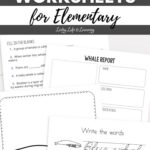
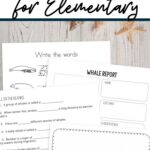
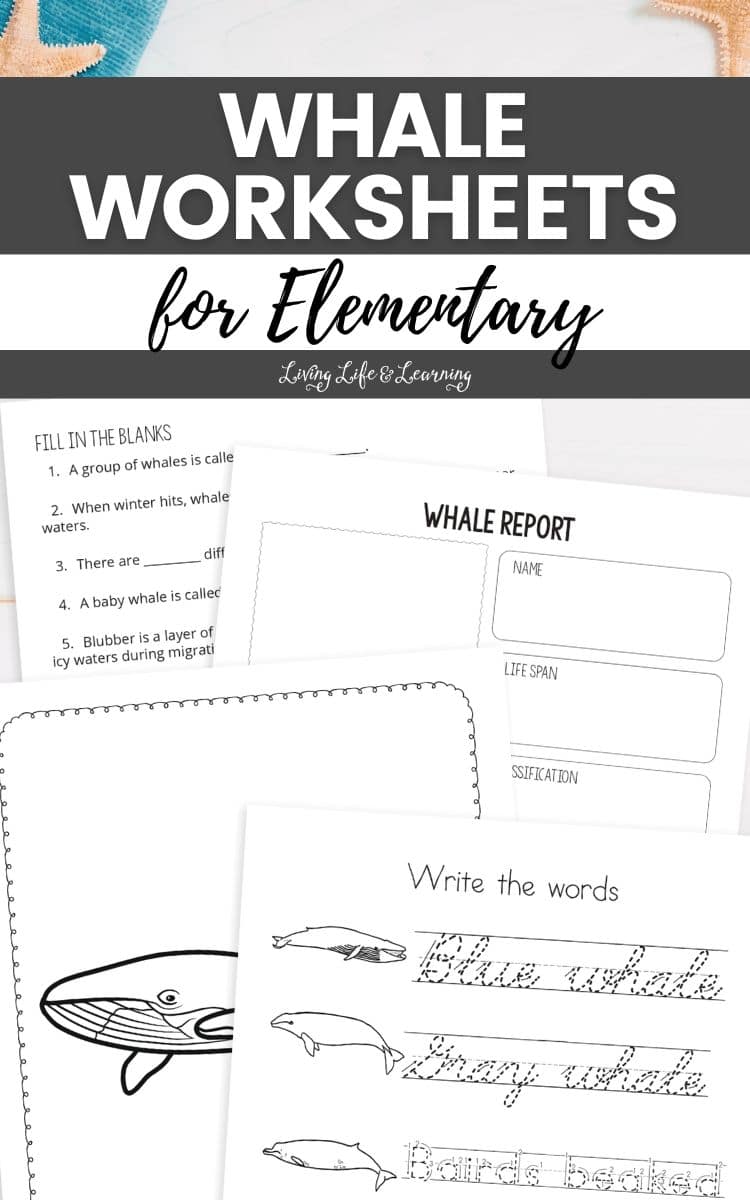
The five-page printable includes four activity pages and a fill-in-the-blank answer key.
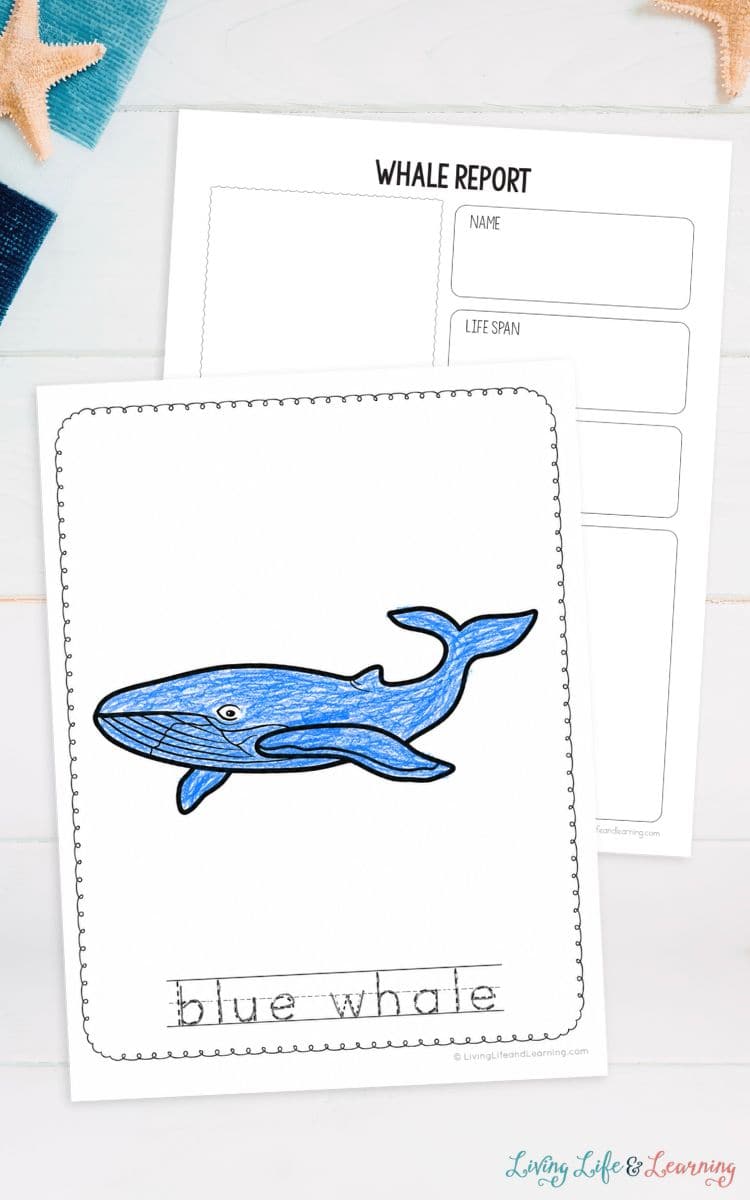
Blue Whale Coloring and Tracing
Children color a large blue whale illustration and trace the words “blue whale” underneath.
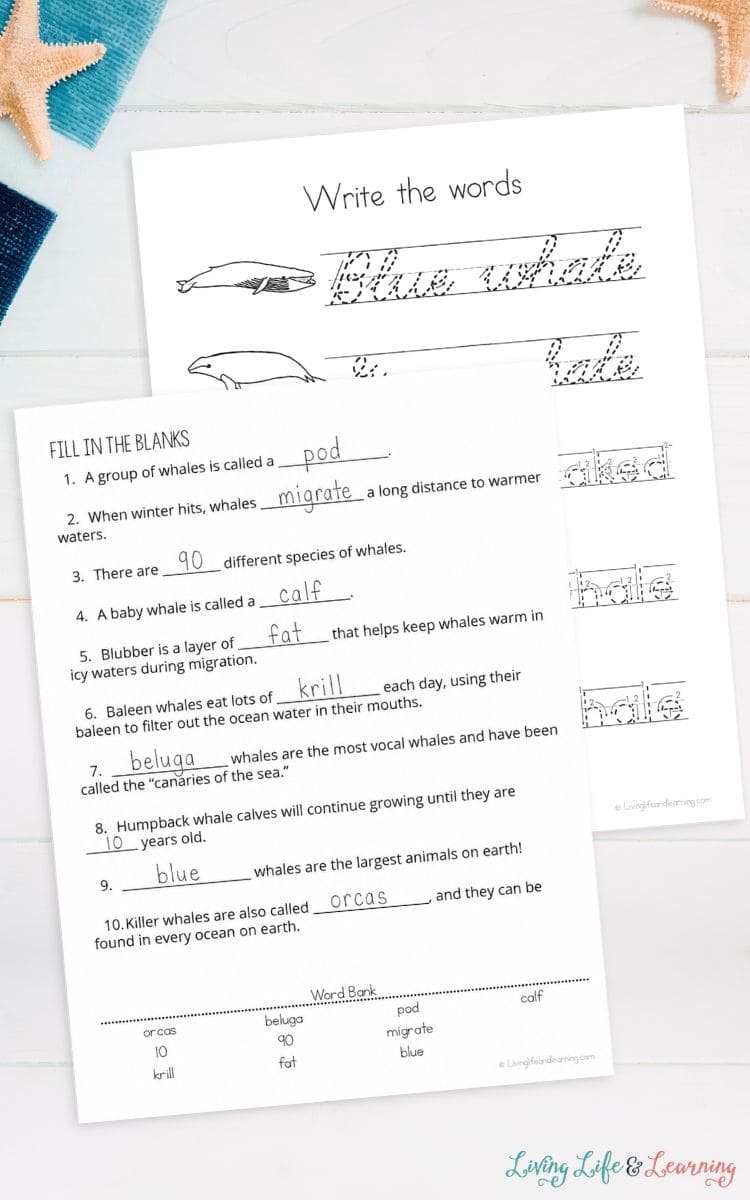
Whale Name Handwriting Practice
Students trace five whale names beside their pictures. Blue whale and gray whale appear in cursive, while the other three names use print letters with formation guides.
Whale Report
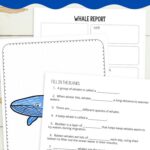
The report has spaces for a whale’s name, life span, classification, appearance, and habitat. A large blank area also provides room for a picture or drawing.
Fill in the Blanks
Children complete ten sentences about whales using a word bank. The questions cover topics such as whale groups, calves, migration, blubber, and feeding.
Answer Key
The final page repeats the ten questions with the intended answers shown in blue beside the blanks.
How Can You Extend the Activity?
Continue the ocean theme with hands-on learning and a little more research.
- Use the comparison activity in these Free Whale Printables to explore similarities and differences between whales and fish.
- Try the Ocean in a Bottle Experiment and describe what happens to the oil and water when the bottle moves.
- Mark the habitat of the whale your child researched on a world map.
- Have students share their reports aloud and tell one fact they found especially interesting.
What Other Activities Can You Try?
Add more whale and ocean activities to your elementary lessons.
- Whale Activity Sheets
- Whale Crafts for Elementary Students
- Ocean Activities for Elementary Kids
- Printable Ocean Charades Game by Darcy and Brian
- Under the Sea Graphing Worksheet by Homeschool of 1
How Can You Keep Learning Going?
Explore more marine life with printable science activities for grades 1-3.


FAQs
These ocean-themed learning pages give young researchers a chance to explore marine mammals while practicing vocabulary, handwriting, and organizing facts.
Download the whale pages below


Hi, I’m Monique Boutsiv! I’ve been homeschooling for 18 years and have four children ranging from toddler to adult. I create science activities, educational printables and homeschool resources for preschool through elementary-aged children.
Today, Living Life and Learning includes more than 2,500 printable activities and educational resources to help parents and teachers spend less time planning and more time learning.
Follow along for new printable activities