
Human Body Worksheets for Elementary

Human Body Worksheets for Elementary are an easy way to add anatomy to your lessons without a big setup. I like having ready-to-print science pages on hand for quick lessons that still feel useful.
For more ideas, check out my list of human body worksheets for Kids. I’ve found that having several options helps when one child needs a quiet worksheet and another needs something more hands-on.
This printable gives kids in grades 1-3 a simple overview of organs, bones, and body systems. Keep reading to see what’s included, what supplies you need, and a few ways to stretch the lesson.
This post may contain affiliate links meaning I get commissions for purchases made through links in this post. Read my disclosure policy here.
Why do kids need to learn about the human body?
Kids are curious about how their bodies work, so this topic usually feels personal right away. Early anatomy lessons also make health, movement, and daily habits easier to understand.
- Body awareness: Children learn what different parts of the body do and why they matter. This helps them connect science to their own bodies.
- Health connections: Kids can better understand the importance of rest, food, exercise, and hygiene. My older kids grasped healthy habits more easily when we tied them to organs and bones.
- Science vocabulary: Words like brain, lungs, heart, spine, and pelvis become familiar. This builds confidence for later biology lessons.
- Observation skills: Diagrams, labels, and picture clues help kids pay attention to details. That skill carries into other science work, too.
Best Human Body Books for Elementary Science
I like keeping age-appropriate human body books nearby so kids can see colorful diagrams and connect each worksheet to real science facts.
Knowledge Encyclopedia Human Body!Uncover the Human BodyMy Amazing Body Machine: A Colorful Visual Guide to How Your Body WorksKnowledge Encyclopedia Human Body (Knowledge Encyclopedia For Children)Inside Your Outside! All About the Human Body (The Cat in the Hat’s Learning Library)The Magic School Bus Inside the Human Body


Skills Kids Can Learn From This Human Body Printable
These pages support science learning while giving children practice with writing, coloring, and reading.
- Labeling and matching: Kids use word banks and pictures to name body parts. This helps them connect vocabulary to visuals.
- Fine motor control: Coloring and writing answers give kids pencil practice. I used pages like these when my older kids needed a calmer table activity.
- Reading for meaning: Students read short clues and complete sentences about organs. This adds helpful language arts practice to science time.
Human Body Printable Packs for More Hands-On Learning
When you want to keep going, printable packs can add more structure without extra planning. They’re great for adding more practice with anatomy and body systems.


Supplies Needed for These Human Body Worksheets
You only need basic homeschool supplies for these printable pages.
- Printer (I have this one)
- Paper
- Pencil
- Crayons
I have the HP printer 8710, but it’s no longer available. It’s been running well for years now. Consider another HP Instant Ink-ready printer so that you can use their program to send you ink cartridges whenever your printer gets low on ink.
What’s included in the anatomy worksheets for elementary?
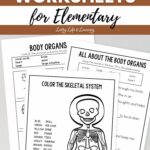
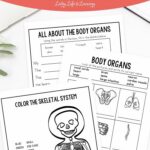
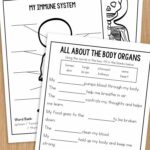
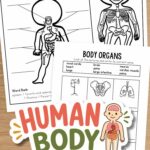
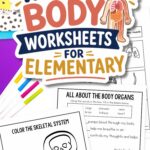
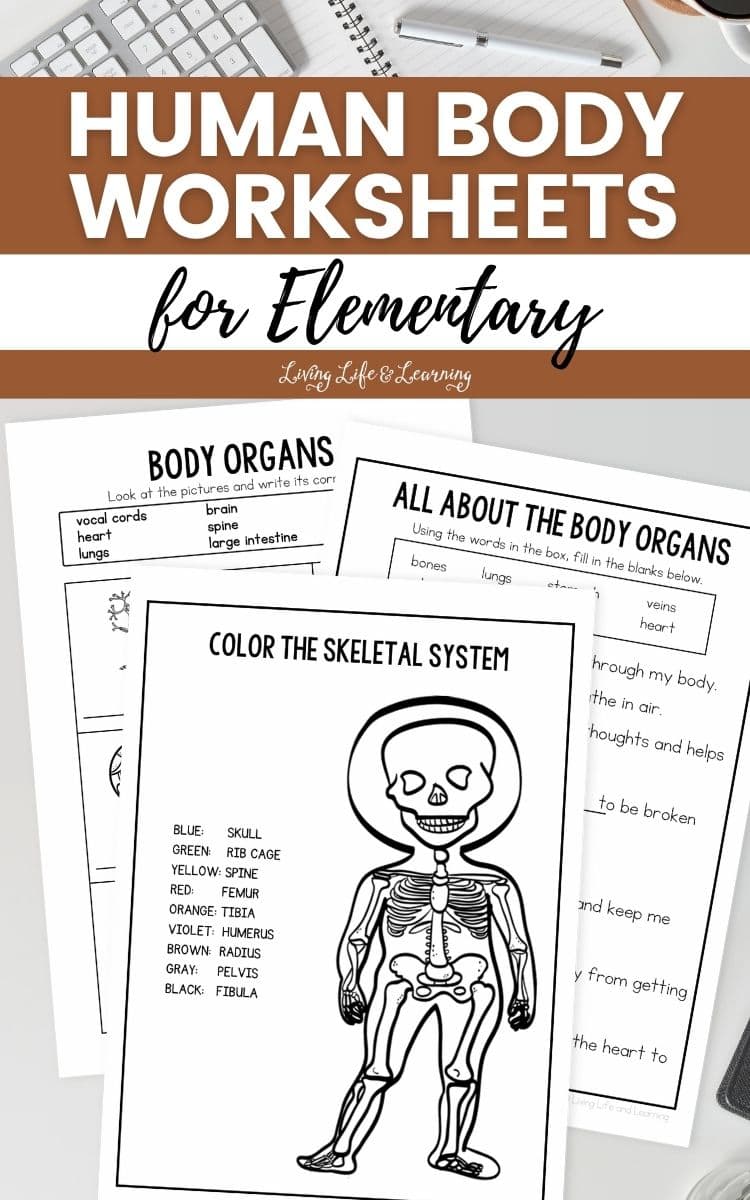
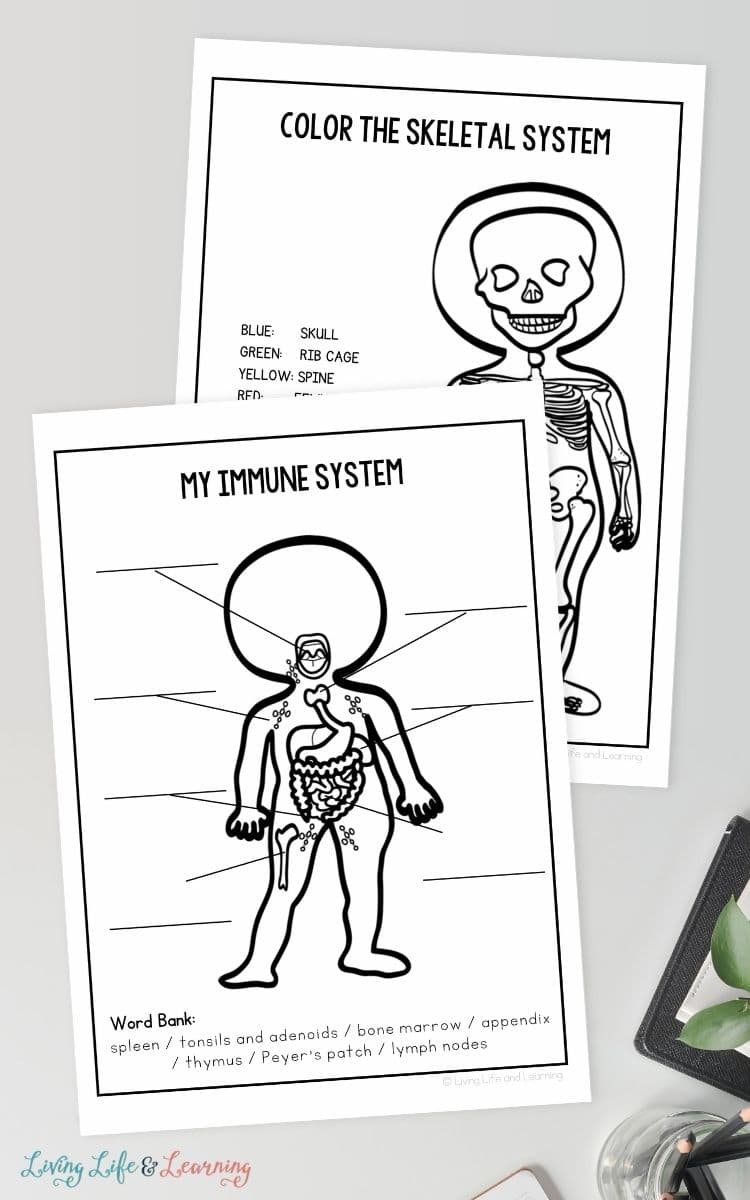
This printable includes 4 pages that cover the immune system, skeletal system, body organs, and organ functions.
My Immune System
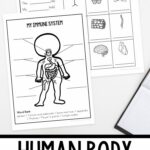
Kids label immune system parts using a word bank with spleen, tonsils and adenoids, bone marrow, appendix, thymus, Peyer’s patch, and lymph nodes. This page works well after a short lesson or read-aloud.
Color the Skeletal System
Students color bones by key, including the skull, rib cage, spine, femur, tibia, humerus, radius, pelvis, and fibula. Color-by-key pages helped my kids review facts without feeling like they were doing another writing task.
Body Organs
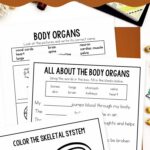
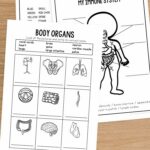
Kids look at pictures and write the correct names from the word bank. The terms include vocal cords, heart, lungs, brain, spine, large intestine, neuron, cardiac muscle, and pelvis.
All About the Body Organs
This fill-in-the-blank page reviews what organs and body parts do. Kids complete sentences about the heart, lungs, brain, stomach, kidneys, bones, skin, and veins.
How to Extend the Human Body Activity
These worksheets work on their own, but you can also turn them into a longer anatomy lesson with a few simple add-ons.
- Play anatomy games: Try these human anatomy games for kids. They make the review feel more active.
- Try a STEM project: Add these human body STEM activities. Models and experiments help kids picture body systems.
- Create a science notebook: Paste each page into a notebook. Add one fact or drawing beside each worksheet.
- Use movement: Have your child point to body parts like ribs, spine, skull, or pelvis. Then act out breathing, bending, or a heartbeat rhythm.
More Human Body Activities for Kids
If your child enjoyed these pages, keep the unit going with more anatomy printables, books, games, and hands-on science ideas.
- Human Body Crafts for Elementary
- Human Body Organs Coloring Pages for Kids
- Simple Heart Pump Model
- Parts of the Ear Worksheets for Kids
- Ear Worksheets for Kids
- 21 Human Anatomy Worksheets for Kids by Homeschool of 1
- Human Body Bingo Printable Game by Darcy and Brian
These Human Body Worksheets for Elementary are a simple way to teach anatomy to kids in grades 1-3. Print the pages, grab crayons and a pencil, and use them for a quick science lesson or a larger human body unit.
Download the human body printable below


Hi, I’m Monique Boutsiv! I’ve been homeschooling for 18 years and have four children ranging from toddler to adult. I create science activities, educational printables and homeschool resources for preschool through elementary-aged children.
Today, Living Life and Learning includes more than 2,500 printable activities and educational resources to help parents and teachers spend less time planning and more time learning.
Follow along for new printable activities