
Ear Worksheets for Kids

Need a simple way to teach hearing and sound? These Ear Worksheets for Kids will help. I use printables like this when I want a science lesson that is easy to teach and easy for kids to understand.
I paired worksheets with short talks and books so the lesson made sense right away. If you want more pages for your unit, check out my human body worksheets for kids.
This printable pack helps kids learn what ears do, how we hear, and why sound matters. It also gives you a simple way to turn one worksheet set into a solid science lesson.
This post may contain affiliate links meaning I get commissions for purchases made through links in this post. Read my disclosure policy here.
Why do kids need to know about the human ears?
Learning about the ears helps kids understand how their bodies work and why hearing matters in daily life. It also gives them a better sense of safety, communication, and how they respond to the world around them.
- Body awareness: Kids begin to see that the ear is more than the part they can see on the outside.
- Listening skills: Activities about sound can help children pay closer attention during lessons and conversations.
- Safety cues: Knowing the warning sounds can help students understand signals such as alarms, sirens, and bells.
- Science vocabulary: Children get practice with words related to hearing, sound, and the parts of the ear.
- Real-world connection: This topic is easy to link to everyday moments at home, outside, and in the car.
Recommended Human Body Books
I always liked having a few solid nonfiction books nearby during our body lessons because they gave my kids another way to review key facts without making the lesson feel repetitive.
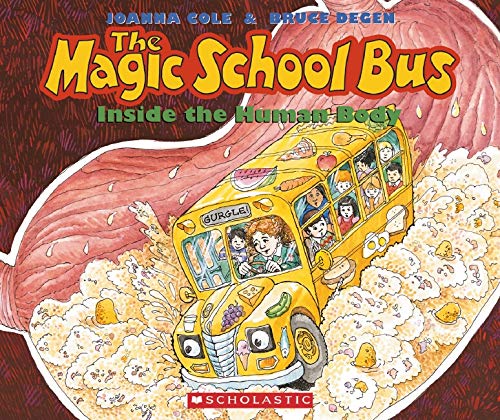
My Book of the Human Body: For Kids Ages 6-12.Human Body! (Knowledge Encyclopedias)First Human Body Encyclopedia (DK First Reference)The Magic School Bus Inside the Human BodyEyewitness Visual Dictionaries: The Visual Dictionary of the Human Body (DK Eyewitness)Complete Book of the Human Body




Skills kids will learn with this printable
This ear printable gives early elementary students a mix of science, vocabulary, thinking practice, and simple writing. I like that it covers more than one skill, so it feels worthwhile even on days when we need to keep lessons short.
- Talk through the topic first: Before starting the pages, go over what the ears do and name a few sounds your child hears every day.
- Let your child explain answers aloud: I found that when my kids talked through their thinking first, written work felt much easier.
- Use the pages over several days: You do not need to finish the full pack at once, and spreading it out can help ideas stick better.
Recommended human body printable packs
If you want to build on this lesson, I also have more human body printables and hands-on activities you can add to your homeschool plans. I liked using extra themed pages like these when I wanted to keep the topic going without having to plan from scratch.


Supplies needed for the Human Ear Activities for Kids
You do not need much to get started with this activity pack, which is one reason I enjoy using printables like this for homeschool science.
- Printer (I have this one)
- Paper
- Pencil
- Crayons
I have the HP printer 8710, but it’s no longer available. It’s been running well for years now. Consider another HP Instant Ink-ready printer so that you can use their program to send you ink cartridges whenever your printer gets low on ink.
What’s included in the human ear activity pack?
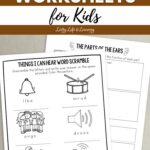
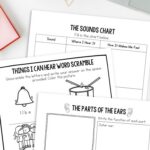
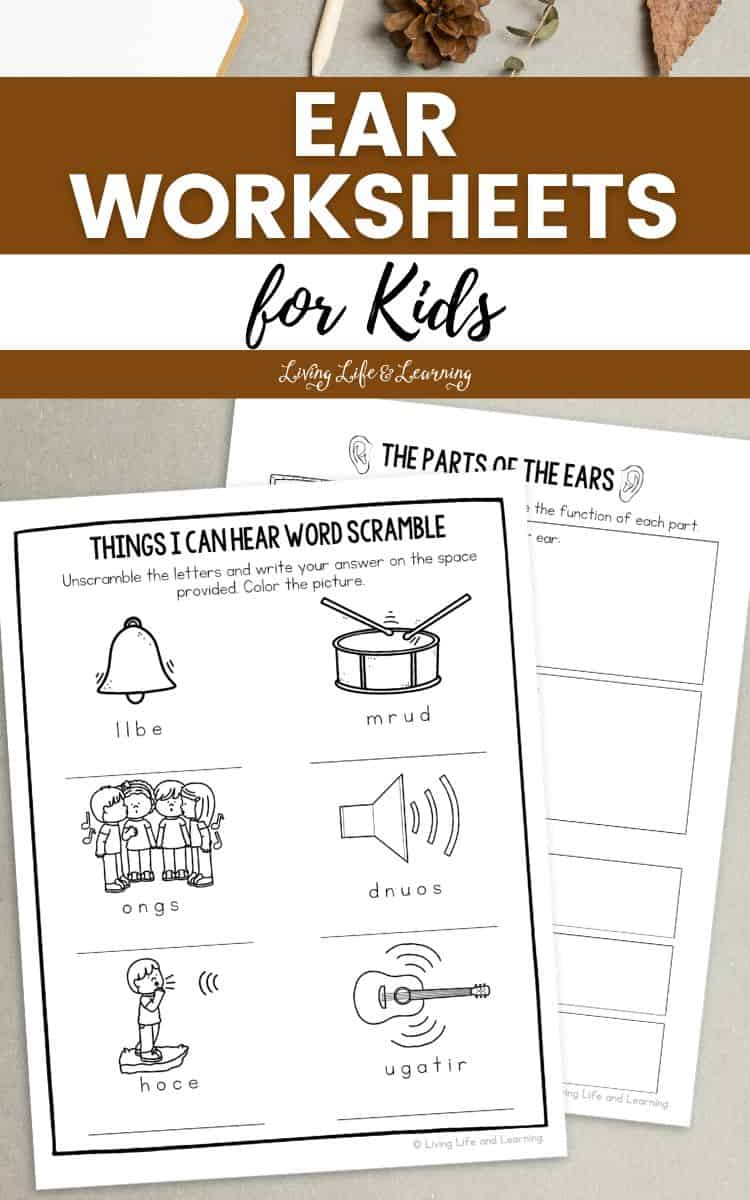
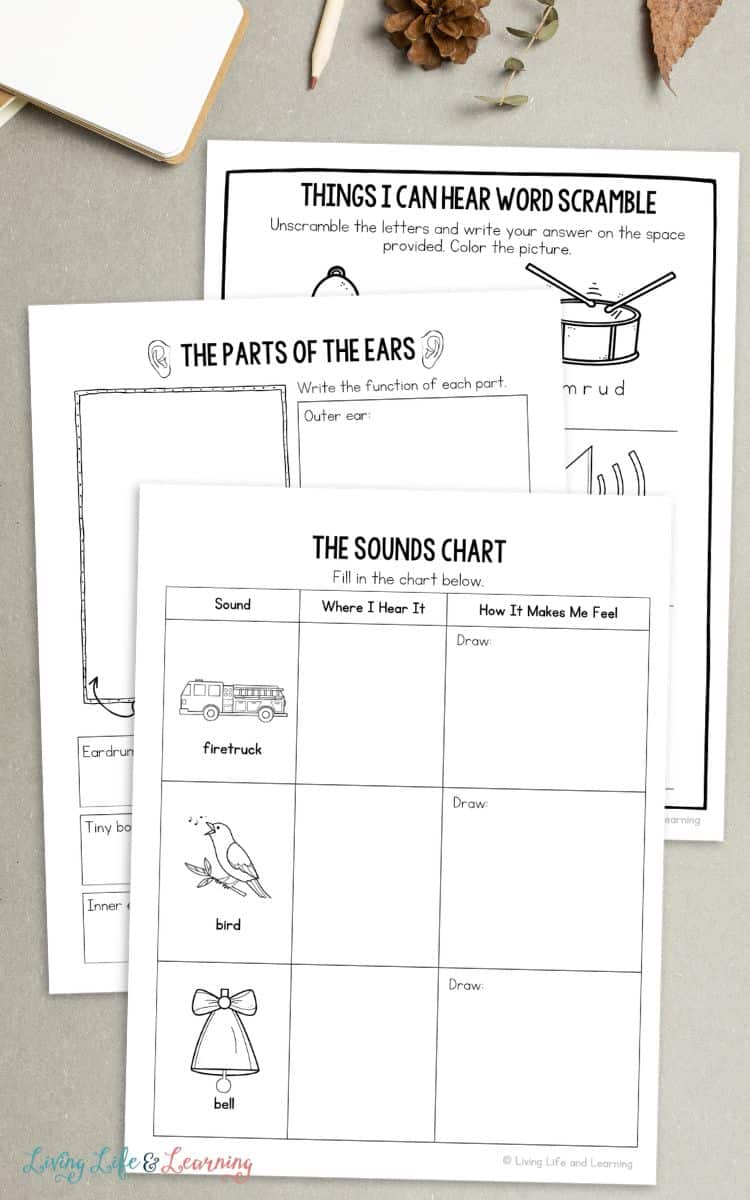
Things I Can Hear Word Scramble
This page asks kids to unscramble hearing-related words and then color the matching pictures. It is a fun way to work on spelling, sound vocabulary, and visual recognition simultaneously.
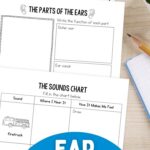
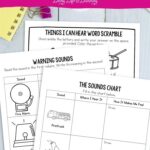
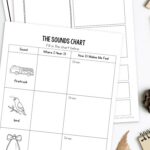
The Sounds Chart
Kids fill in a chart about sounds they hear, where they hear them, and how those sounds make them feel. I like pages like this because they give children room to connect science with their own experiences.
The Parts of the Ears
This worksheet asks students to look at the ear and write the function of each part, including the outer ear, ear canal, eardrum, tiny bones, and inner ear. It gives kids a simple introduction to ear anatomy without making the lesson feel too heavy.
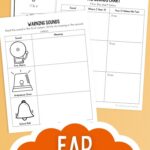
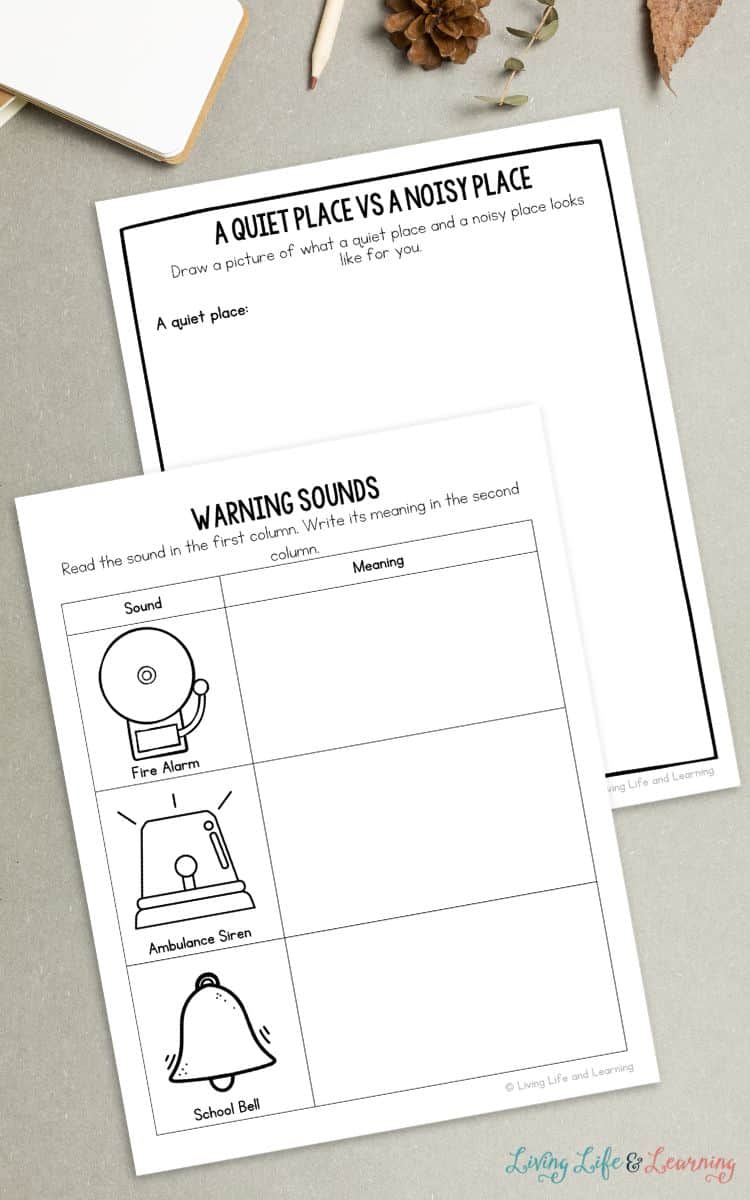
Warning Sounds
Children read common warning sounds and write what each one means. This page adds a practical life-skill angle by helping kids think about how sound can provide helpful information.
A Quiet Place vs A Noisy Place
This activity invites kids to draw a quiet place and a noisy place from their own perspective. I like this one because it opens the door to a good talk about sound levels, comfort, and different environments.
Answer Key
The pack also includes an answer key for the word scramble page. That makes it easier for moms to check work quickly or let older kids review on their own.
Ways to extend the activity
If your child enjoys this printable, there are several easy ways to keep the lesson going without making it feel dragged out. I usually got the best response when I added one extra idea right after the worksheet, while the topic was still fresh.
- Go on a sound hunt: Walk through your home or yard and make a list of every sound your child notices. This works well for helping kids pay attention to soft, loud, far, and near sounds.
- Try human body organs coloring pages: Use these pages for kids to connect the ears to the rest of the body. It is a nice next step when you want to show that every body system has an important job.
- Add simple science projects: Explore more ideas with these human body STEM activities. Hands-on work can help kids remember what they learned long after the worksheet is done.
- Compare quiet and loud spaces: Have your child sort places by the kind of sound level they expect to hear there. My older boys liked this kind of activity when they were younger because it turned into a good conversation instead of feeling like extra schoolwork.
More human body activities for kids to try
If your child likes learning about the body, it helps to keep going while that interest lasts. I found that moving from one related topic to another made our science time feel smoother and easier to plan.
- How to Make a Lung Model
- Muscular System Hands-on Activities
- Human Body Printables for Kids
- Horton Hears A Who Handprint Craft by Simple Everyday Mom
- 21 Human Anatomy Worksheets for Kids by Homeschool of 1
These hearing worksheets for kids are a simple way to teach about hearing, sound, and the parts of the ear in a way that feels manageable for moms and engaging for children. Whether you use the pack during a human body unit or as a quick science lesson, it gives your learners in grades 1 to 3 a meaningful way to explore how the ears work.
Download the Human Ear printable below


Hi, I’m Monique Boutsiv! I’ve been homeschooling for 18 years and have four children ranging from toddler to adult. I create science activities, educational printables and homeschool resources for preschool through elementary-aged children.
Today, Living Life and Learning includes more than 2,500 printable activities and educational resources to help parents and teachers spend less time planning and more time learning.
Follow along for new printable activities
The download that I received is for the letter A . Not the ear one.
Thanks we fixed the link.