
5 Senses Tracing Worksheets

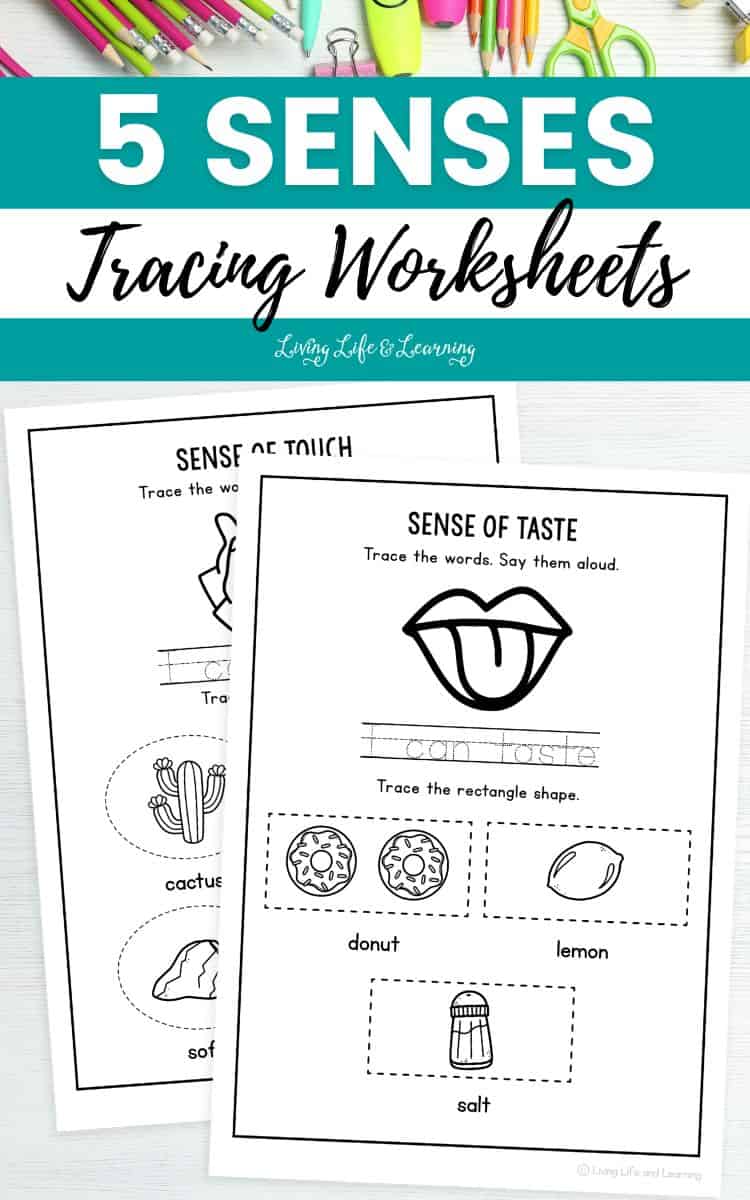
If you are starting a preschool unit on the human body, my 5 Senses Tracing Worksheets are an easy way to build early skills while keeping learning hands-on. I created these pages to help young children connect what they see, hear, smell, taste, and feel with simple vocabulary and shapes.
When my older boys were in preschool, I paired activities like this with my favorite ideas from my list of 5 senses activities for kids. Having a mix of movement, books, and pencil practice kept our days balanced and fun.
If you are looking for a simple, print-and-go option that still feels meaningful, keep reading. I will walk you through what is inside the pack and how I used similar pages in our homeschool.
This post may contain affiliate links meaning I get commissions for purchases made through links in this post. Read my disclosure policy here.
My favorite five senses books for preschoolers
I always added engaging picture books about the human body and how it works to our unit because stories made abstract ideas easier to understand and remember.
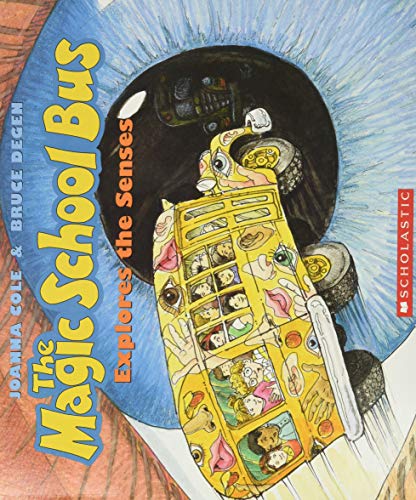
Look, Listen, Taste, Touch, and Smell: Learning About Your Five Senses (The Amazing Body)My Five Senses (Let’s-Read-and-Find-Out Science 1)The Five SensesThe Magic School Bus Explores the SensesMy Five Senses (Aladdin Picture Books)DK Super Readers Pre-Level Five Senses


Why do kids need to learn about the five senses?
Understanding the five senses helps preschoolers make sense of the world around them. It also gives them language to describe everyday experiences.
- Builds vocabulary: Children learn words connected to sight, sound, smell, taste, and touch, which supports early reading readiness.
- Encourages observation skills: Talking about what they notice helps them pay attention to details in their environment.
- Supports science foundations: Exploring how the body works lays the groundwork for future anatomy and biology lessons.
- Strengthens communication: When kids can explain what they feel or notice, conversations become richer and more meaningful.
Recommended Human Body Printable Packs
If you are working through a full human body theme, I also like adding a few simple printable packs that let kids explore body parts through fun activities and playful learning.


Skills your child will practice with these pages
These worksheets go beyond simple pencil work. They combine early literacy, fine motor development, and shape recognition in a way that feels manageable for preschool.
- Encourage proper pencil grip before starting each page, so small hands build strength correctly.
- Read the sentence together and have your child repeat it aloud to support language development.
- Take your time with each shape, guiding their finger along the dotted line before using a crayon or pencil.
Supplies you will need for the 5 Senses Activity
You do not need much to get started, which makes this a great low-prep activity.
- Printer (I have this one)
- Paper
- Pencil
- Crayons
I have the HP printer 8710, but it’s no longer available. It’s been running well for years now. Consider another HP Instant Ink-ready printer so that you can use their program to send you ink cartridges whenever your printer gets low on ink.
What’s included in the 5 senses tracing pages?
My Five Senses Overview
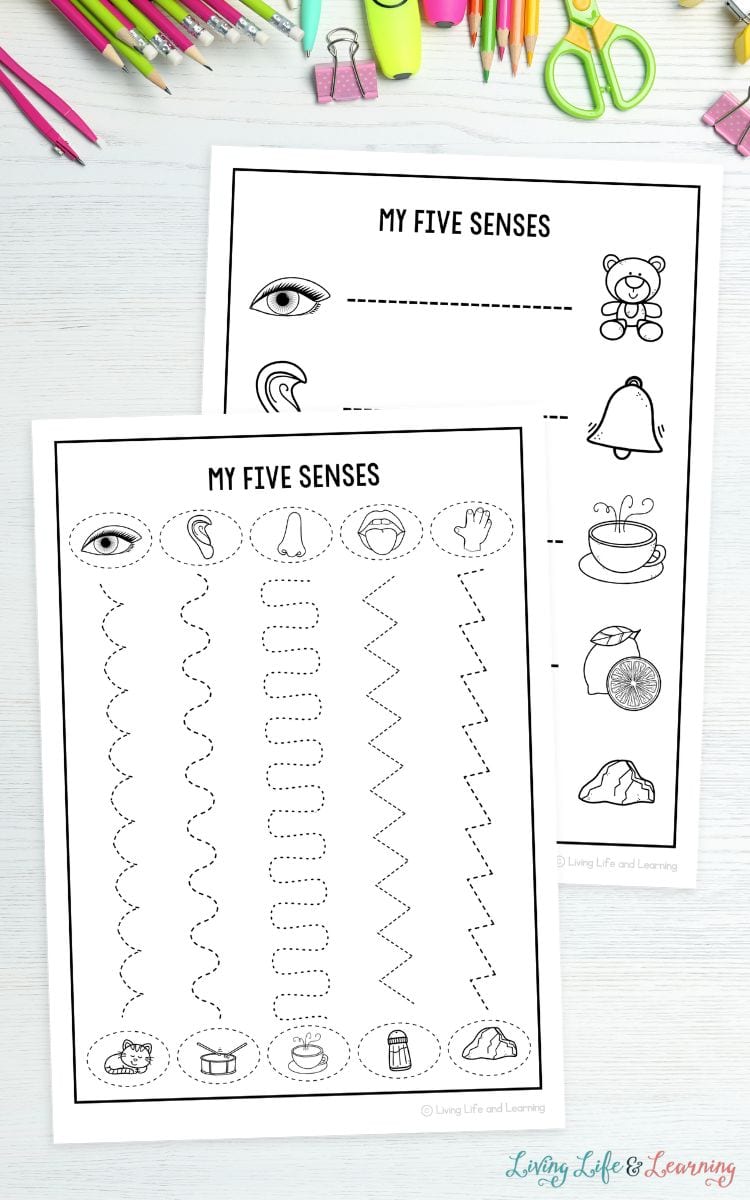
This page introduces each body part connected to sight, hearing, smell, taste, and touch. Children trace simple lines next to clear images like an eye, ear, nose, tongue, and hand.
Sense of Sight
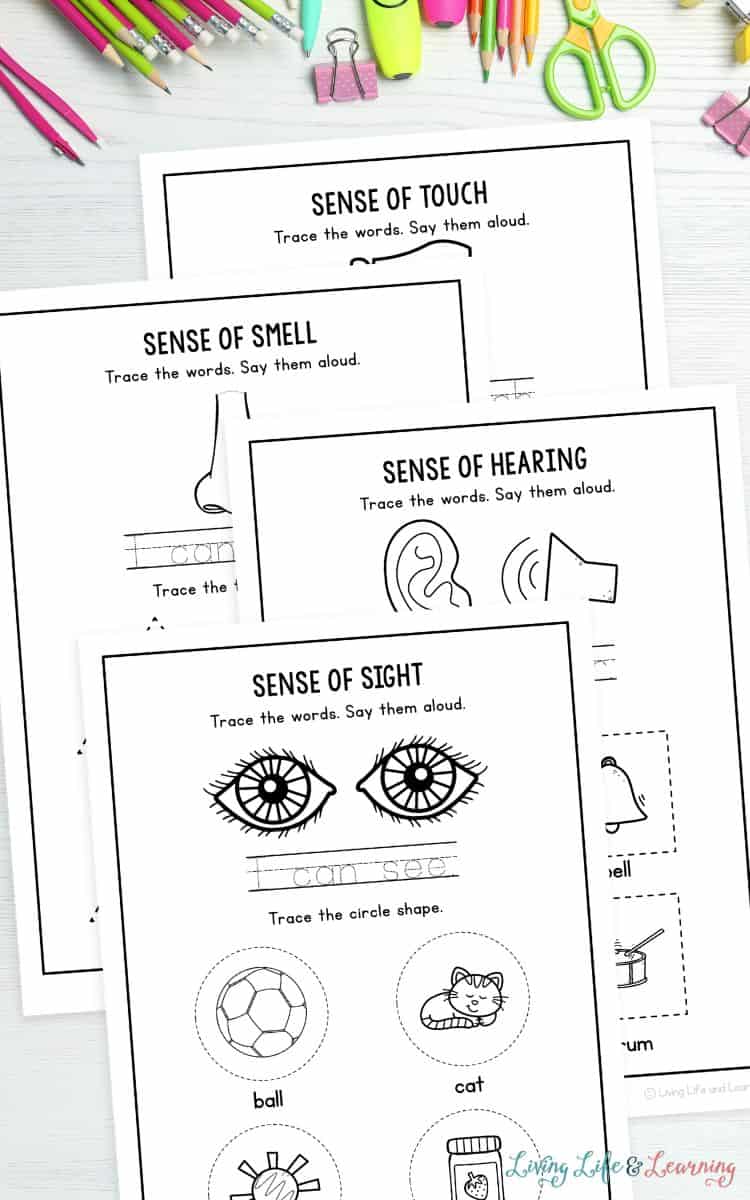
Kids trace the sentence “I can see” and practice reading beginner words such as ball, cat, sun, and jar. They also trace a circle shape while connecting pictures to what they can observe with their eyes.
Sense of Hearing
This page focuses on the sentence “I can hear” and on vocabulary such as ear, bell, guitar, and drum. Preschoolers trace a square while thinking about sounds they notice during the day.
Sense of Smell
Children trace “I can smell” and read words such as nose, bread, coffee, and perfume. A triangular shape is included to add another layer of early-geometry practice.
Sense of Taste
On this sheet, kids work on “I can taste” and words like donut, lemon, and salt. They trace a rectangle while discussing different flavors they have tried before.
When my daughter was younger, she loved talking about sour lemons during this lesson. My teens still joke about her dramatic reaction the first time she tasted one.
Sense of Touch
This page features “I can touch” along with words like cactus, hand, soft, and sand. Children trace an oval and talk about textures they feel around the house.
My older boys once compared rough rocks and smooth fabric during a similar activity, and it turned into a full sensory scavenger hunt.
Simple ways to extend this activity
If you want to stretch this unit a bit further, there are many easy options that do not require extra planning.
- 5 senses art and craft activities – Try these creative ideas to add painting and hands-on projects to your study.
- Preschool five senses worksheets – Add more printable practice with these pages for additional review.
- Sensory walk outside – Take a short walk and ask your child to name one thing they can see, hear, and feel. This keeps learning active and connected to real life.
- Mystery bag game – Place safe objects in a bag and let your child guess what each item is using touch only.
More five senses activities for kids to try
If your child enjoys this theme, there are plenty of other simple ideas you can add throughout the week to reinforce what they learned.
- Five Senses of Summer Worksheets
- Best Books About the 5 Senses
- My Five Senses Booklet
- Five Senses Cut and Paste Worksheets
- Five Senses Books for Toddlers
- 5 Senses Puppets For Kids by Simple Everyday Mom
- Easy Sensory Ideas by 3 Boys and a Dog
Using themed worksheets like this gave our preschool days structure without feeling overwhelming. I loved watching my children gain confidence as they recognized words and shapes tied to their own experiences.
If you are planning a human body unit for preschool, these pages can be a gentle starting point that blends early academics with everyday discovery.
Download the five senses printable below


Hi, I’m Monique Boutsiv! I’ve been homeschooling for 18 years and have four children ranging from toddler to adult. I create science activities, educational printables and homeschool resources for preschool through elementary-aged children.
Today, Living Life and Learning includes more than 2,500 printable activities and educational resources to help parents and teachers spend less time planning and more time learning.
Follow along for new printable activities